Category: Global

  • LDT and Global Risk: When ‘Greenwashing’ Creates Legal Vulnerability: Designing a Unified Compliance Strategy (GDPR and ESG)
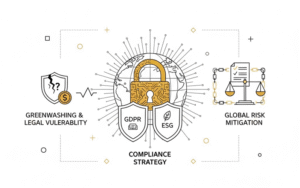
    LDT and Global Risk: When ‘Greenwashing’ Creates Legal Vulnerability: Designing a Unified Compliance Strategy (GDPR and ESG)

    In the digital economy, truth is the most valuable currency. Corporations compete in ethics and sustainability (ESG), but often their public “green” claims (Greenwashing) stand in sharp contrast to their actual, often aggressive, practices of data collection and processing.

    This inconsistency becomes the biggest legal trap in the event of a Data Breach. When a regulator or prosecutor gains access to internal documentation after a breach, they can use Greenwashing as evidence that the company acted with greater negligence, ignoring its own publicly declared ethical standards. The consequence? Maximum GDPR fines and lawsuits for misleading consumers and investors.

    Legal Design Thinking (LDT), together with Legal Tech tools, is essential for designing consistency, preventing your ethical statements from becoming evidence of your liability.

    The Integrity Gap: Greenwashing as Evidence of Severe Negligence

    The problem is not only the data breach itself, but the gap between communication and reality. LDT must close three key risk points:

    • Regulatory Pressure (GDPR): Regulators are increasingly tracking ESG trends. If a company prides itself on ethical practice while its data is unprotected, this automatically raises the level of negligence, increasing penalties.
    • Reputational Collapse (New York): Investors and consumers are unforgiving. Discovering that a Data Breach occurred due to negligence while the company markets itself as an ethical leader leads to a complete collapse of trust.
    • Functional Misalignment: Marketing/PR teams (which write ESG reports) and IT/Legal teams (which implement GDPR) do not communicate effectively. LDT resolves that disconnect.

    LDT: Designing a Unified, Legally Safe Corporate Message

    LDT designs visual tools that force key teams to collaborate and ensure consistency between corporate communication and operational practice.

    Visual "Danger Message Map" (Compliance Danger Map): LDT creates a simple tool (often in the form of a flow diagram) for PR and Marketing teams. This map visually warns:

    • IF you want to use the claim “We only collect necessary data” (ESG), THEN the legal team must confirm a technical audit showing that practices A, B, and C are fully compliant with GDPR. A red signal remains until legal confirmation is provided.
    • Dashboard for Consistency Audit (The Integrity Check): LDT designs a control panel for leadership that visually compares in one place:
      1. Public statements (ESG/Website)
      2. Actual implementation (GDPR documents and technical safeguards)
      If there is a significant discrepancy, the system automatically flags it. This makes the risk of “Greenwashing” measurable and manageable.
    • Visual Crisis Protocol: A Data Breach communication protocol designed so that, during the drafting of the public statement, an ESG lawyer/ethics specialist is automatically included. Their role is to ensure that the breach statement does not undermine all of the company's previously declared ethical claims.

    In an era of increased transparency and strict regulation, LDT and Legal Tech provide organizations with the most advanced tool for managing integrity. By designing a unified compliance strategy, you help companies minimize the risk that their best intentions become their greatest legal liability.

    When a Data Breach occurs, does your compliance board agree with your communications board?

    Other blogs

    CSRD: Kada ESG postaje lični rizik. Kako Dokazna arhitektura pomjera ESG iz održivosti u odgovornost

    CSRD: When ESG Becomes a Personal Risk. How Proof Architecture Shifts ESG from Sustainability to Accountability

    March was traditionally reserved for closing the financial books. But from 2026...

    Ko će potpisati? CSRD i kraj kolektivne odgovornosti u regionalnim kompanijama

    Ko će potpisati? CSRD i kraj kolektivne odgovornosti u regionalnim kompanijama

    March in the Balkans is traditionally a month of final accounts. But in 2026, March brings…
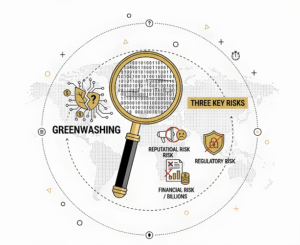
  • Greenwashing in Global Law: Three Key Risks Worth Billions for Multinational Companies

    Greenwashing in Global Law: Three Key Risks Worth Billions for Multinational Companies

    From "Eco-Friendly" to a Global Legal Battlefield

    The era of soft, non-committal "green" claims is over. Today, every word a company utters about sustainability—on packaging in Berlin, in an ad in New York, or in an annual report in London—represents a legal liability.

    At the core of the global fight against Greenwashing are Consumer Protection Laws, which serve as the primary mechanism for sanctioning misleading advertising. Unlike regional fines, the global market risks sanctions measured as a percentage of annual revenue (turnover).

    What are the three key risks facing multinational companies in this new global legal landscape?

    The Global Regulatory Framework: The Threat of Coordinated Action

    Global oversight of Greenwashing is no longer fragmented. It is enforced through powerful, mutually aligned regulations:

    🇪🇺 EU (Green Claims Directive / Empowering Consumers Directive): Foresees penalties of up to 4% of annual EU turnover for misleading claims.

    🇬🇧 UK (CMA Green Claims Code): The UK Competition and Markets Authority (CMA) threatens fines of up to 10% of global annual turnover for the most serious infringements, following the adoption of new legislation.

    🇺🇸 US (FTC Green Guides): The US Federal Trade Commission (FTC) uses its guidelines (Green Guides) to initiate lawsuits aimed at reclaiming the total profit gained from unfair marketing (Disgorgement).

    This regulatory power creates three key global risks of Greenwashing in the Global Market:

    • Financial Collapse Through a Percentage of Global Turnover
      The largest and newest threat comes from regulators empowered to impose fines proportional to a company's financial strength.
      Abandoning the Fixed Tariff: Regulators in key jurisdictions (EU, UK) have moved away from fixed monetary fines to a "penalty as a percentage of turnover" system. For global corporations, 4% or 10% of global annual turnover can mean billions of dollars.
      Recouping Profits (Disgorgement): In the US, the FTC and civil lawsuits target the "benefit" derived from the deception, demanding that the company return all profits gained from the sale of products based on the disputed "green" claim. This directly threatens balance sheets.
      The financial risk has transformed from an operational cost into a potential existential threat to profit.
    • Arbitration and Consumer Class Actions
      Global consumer protection laws empower not just government agencies, but consumers themselves, especially in North America.
      "Litigation Wave": Greenwashing has become fertile ground for Collective Lawsuits (Class Actions). Once a large company is found to have misled consumers (e.g., with incorrect claims about recyclability or carbon neutrality), thousands or millions of customers join lawsuits seeking damages.
      Risk of "Self-Declaration": Companies that do not align their claims with rigorous standards like the UK Green Claims Code or the future EU GCD are effectively "self-declaring" themselves as targets for lawsuits, as they lack irrefutable, independently verified proof.
      Courts are becoming a second, and often more dangerous, regulatory body for Greenwashing.
    • The "Double Gate" of Regulatory Pre-Approval
      The latest EU directive (GCD) mandates a fundamental operational change: it requires compulsory pre-verification of green claims by an independent, accredited body before the product can even reach the market.
      Operational Paralysis: If the verification process fails, the company not only risks a fine but is barred from using the disputed claim in the EU market. This slows product launches, increases Time-to-Market, and creates inconsistencies in marketing materials worldwide.
      Lack of Standardization: Although the goals are similar (FTC, CMA, EU), the details of substantiation differ. A claim that is "good enough" for one regulatory framework (e.g., less focus on Life-Cycle Assessment in some countries) may be insufficiently substantiated for the strict requirements of the EU.
      Companies must create a "Global Proof Package" that satisfies the strictest standards (EU) to avoid a sales block in key markets.

    The Imperative of "Defensive Sustainability"

    Global Greenwashing regulation has moved from gentle advice to compulsory, multi-million-dollar financial risks. Companies can no longer afford to rely on creative marketing agencies; rigorous, legally-driven transparency is essential.

    Utilizing Legal Design Thinking and Legal Tech is the only path towards sustainable global compliance. These tools allow complex scientific evidence to be converted into a unified, globally applicable "Verification Document"that can pass inspection in London, San Francisco, and Brussels.

    In global law, it is no longer enough to be "green"—you must be able to prove your "greenness" without a single flaw in the evidence chain.

    Other blogs

    CSRD: Kada ESG postaje lični rizik. Kako Dokazna arhitektura pomjera ESG iz održivosti u odgovornost

    CSRD: When ESG Becomes a Personal Risk. How Proof Architecture Shifts ESG from Sustainability to Accountability

    March was traditionally reserved for closing the financial books. But from 2026...

    Ko će potpisati? CSRD i kraj kolektivne odgovornosti u regionalnim kompanijama

    Ko će potpisati? CSRD i kraj kolektivne odgovornosti u regionalnim kompanijama

    March in the Balkans is traditionally a month of final accounts. But in 2026, March brings…

ENG